May 072026
 

The MROI has made its faintest observation yet – a star more than three times fainter than the previous record set in November 2025. This capability unlocks the possibility to study a large number of astronomical objects at high resolution.

Two-telescope operations are now on pause for the summer to allow maintenance work to proceed. Even fainter observations will be pursued when the MROI is back online in the fall.

Mar 272026
 

A key mission of the MROI is to support space domain awareness. The full ten-telescope array will be able to image geostationary satellites from the ground in unprecedented detail. As a first step towards this goal, the team was recently able to produce a fringe signal while observing a communications satellite, Eutelsat 115 West B, with its first two telescopes.

More information can be found in this press release: https://www.nmt.edu/news/2026/an-operational-demonstration-in-optical-interferometry.php

MROI team working to find fringes on a GEO target

MROI team working to find fringes on a GEO target

Nov 112025
 

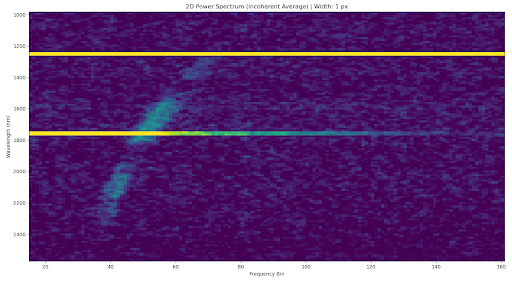
Four months on from celebrating its “first fringes” for a bright star, the MROI has demonstrated that a fringe signal can be measured for a star that appears 3000x fainter.

Dispersed power spectrum corresponding to fringes found on HIP 31377

Dispersed power spectrum corresponding to fringes found on HIP 31377

The team is making continual improvements to the observing procedures that will enable even fainter objects to be measured in the near future.

Jul 122025
 

For the first time, the MROI has interfered the starlight collected by two telescopes to form what is known as “fringes”. This signal was found on the star designated HIP 102488. Fringes encode high-resolution information about the structure of astronomical sources that even today’s largest telescopes cannot resolve.
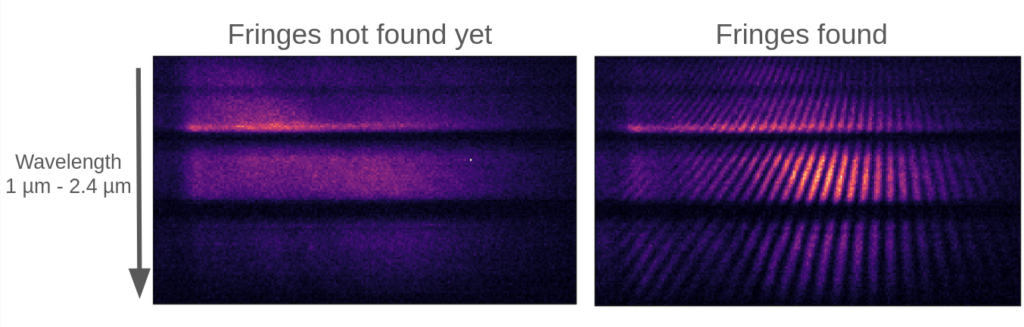
First fringes for the MROI

First fringes for the MROI. The panel on the left shows a typical image seen when fringes are not present. The panel on the right shows a typical image when fringes have been found.


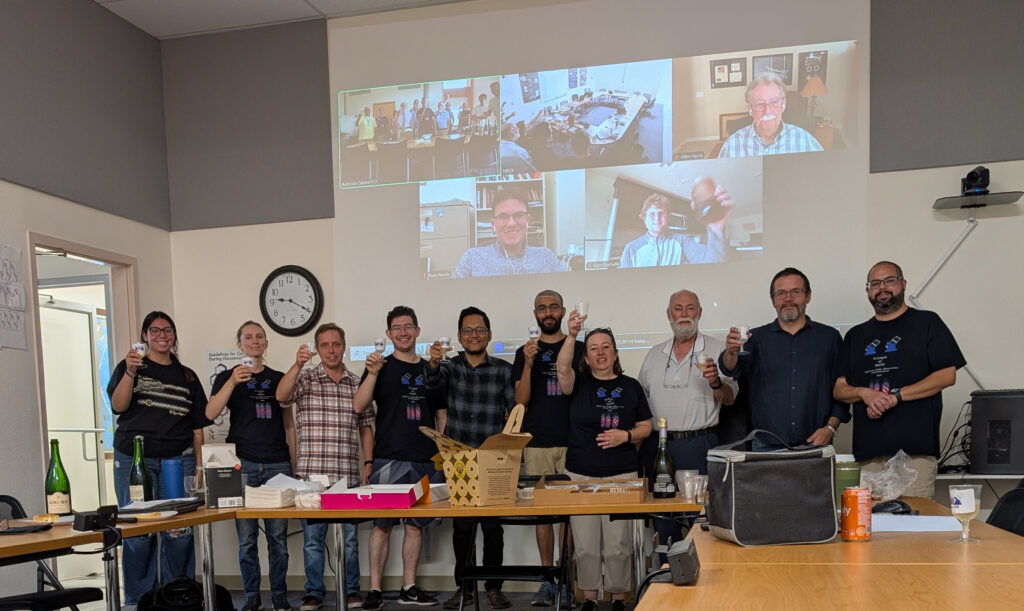
This marked a significant milestone for the project, and of course called for a joint celebration with the team at New Mexico Tech and the University of Cambridge, pictured below.
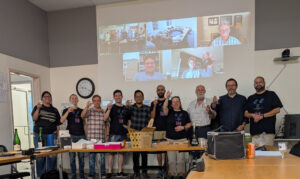
MROI team celebrates first fringes

MROI team celebrates first fringes

More details can be found in this press release: https://www.nmt.edu/news/2026/magdalena-ridge-observatory-interferometer-achieves-first-fringes.php

Aug 312024
 

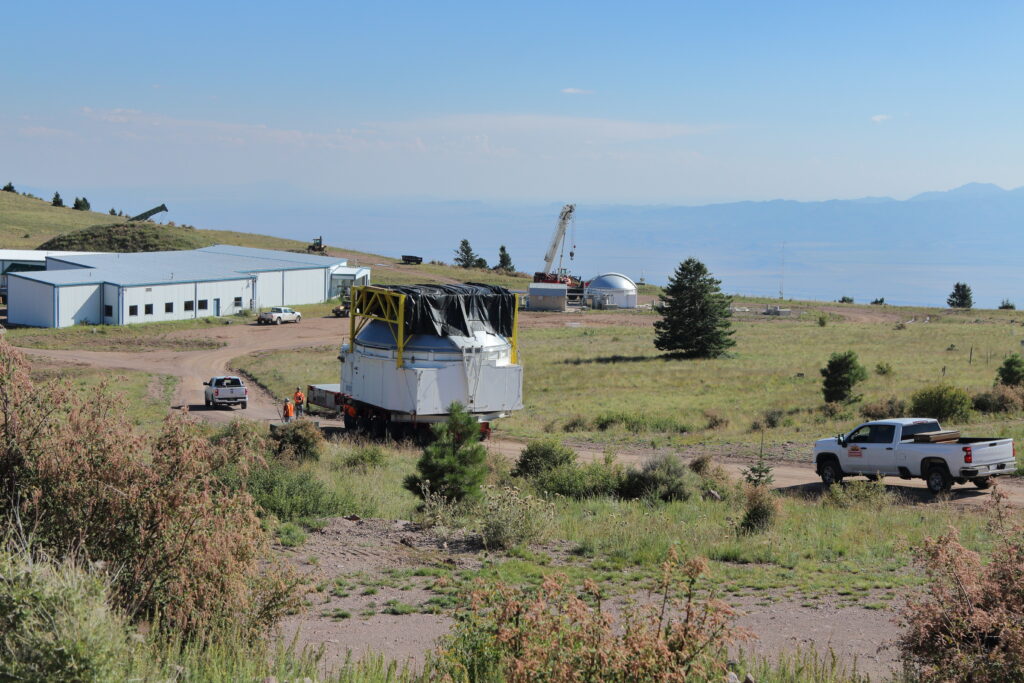
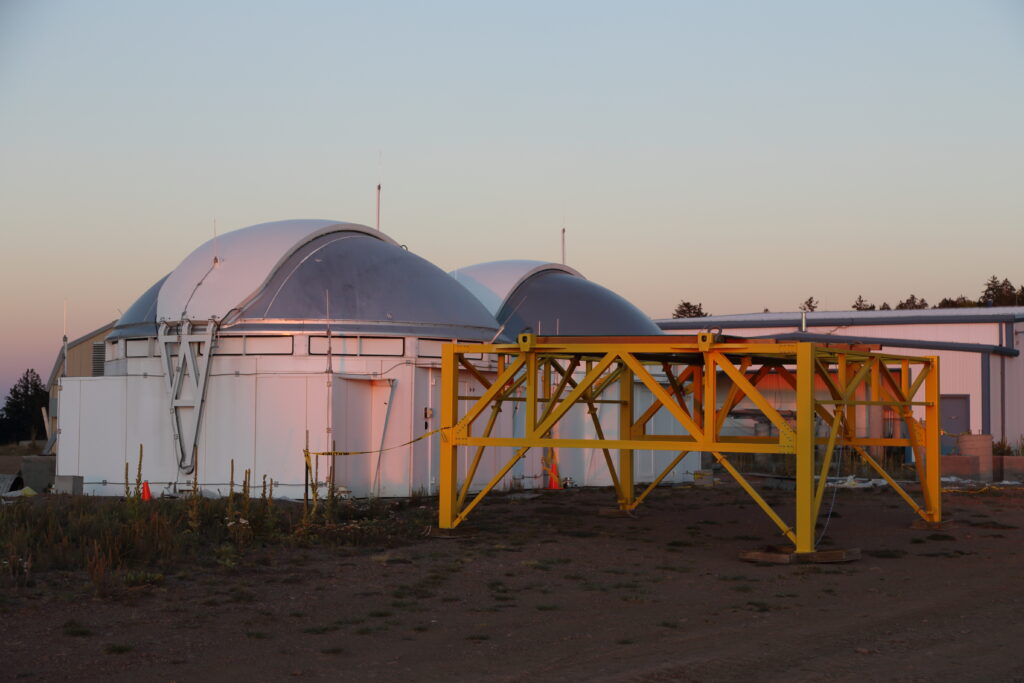
The second 1.4m unit telescope of the MROI has been installed on the array, adjacent to the first telescope. Used together, these two telescopes will form the first baseline of the MROI with a resolution comparable to that of a 7.9m single-dish telescope.

UT2 in transit to the array

UT2 in transit to the array


UT1 and UT2 at sunset

UT1 and UT2 at sunset